New AI tool improves treatment of cancer patients after heart attack
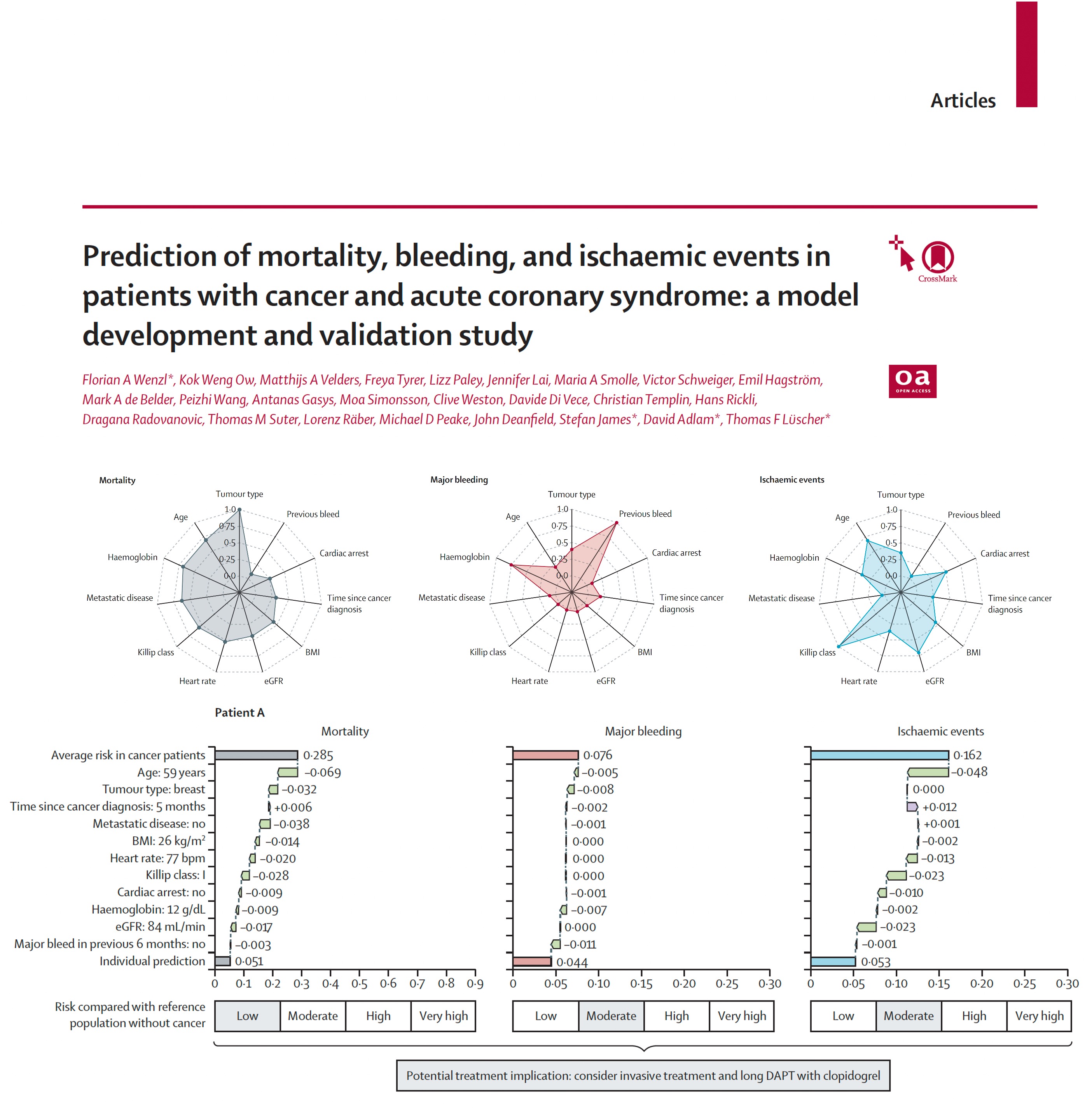
Patients with cancer and acute coronary syndrome (ACS) face unique risks – yet have historically been excluded from clinical trials. A recent study by Dr. Florian A. Wenzl and colleagues, published in The Lancet, applied artificial intelligence (AI) to population-representative data to develop a cancer-specific risk prediction tool: ONCO-ACS. The model predicts mortality, major bleeding, and ischaemic events – helping clinicians balance treatment benefits and risks.
Why this matters:
Early risk stratification across competing risks can help guide:
• Decisions on invasive treatment
• Choice and duration of antithrombotic therapy
• Adaptations in cancer treatment
Study highlights:
• Cancer patients with ACS show a distinct risk profile
• Development of ONCO-ACS: a cancer-specific risk score for mortality, bleeding, and ischaemic events
• Integrates traditional cardiovascular and cancer-related risk factors
• Risk groups based on cancer-free reference population to facilitate the contextualisation of existing clinical evidence
• Large-scale external validation confirmed high performance across multiple countries
The authors hope that the ONCO-ACS score will help personalise the management of patients with cancer and ACS, one of the most challenging patient groups in cardiovascular medicine.